America’s most epic natural landmark you’ve (probably) never heard of
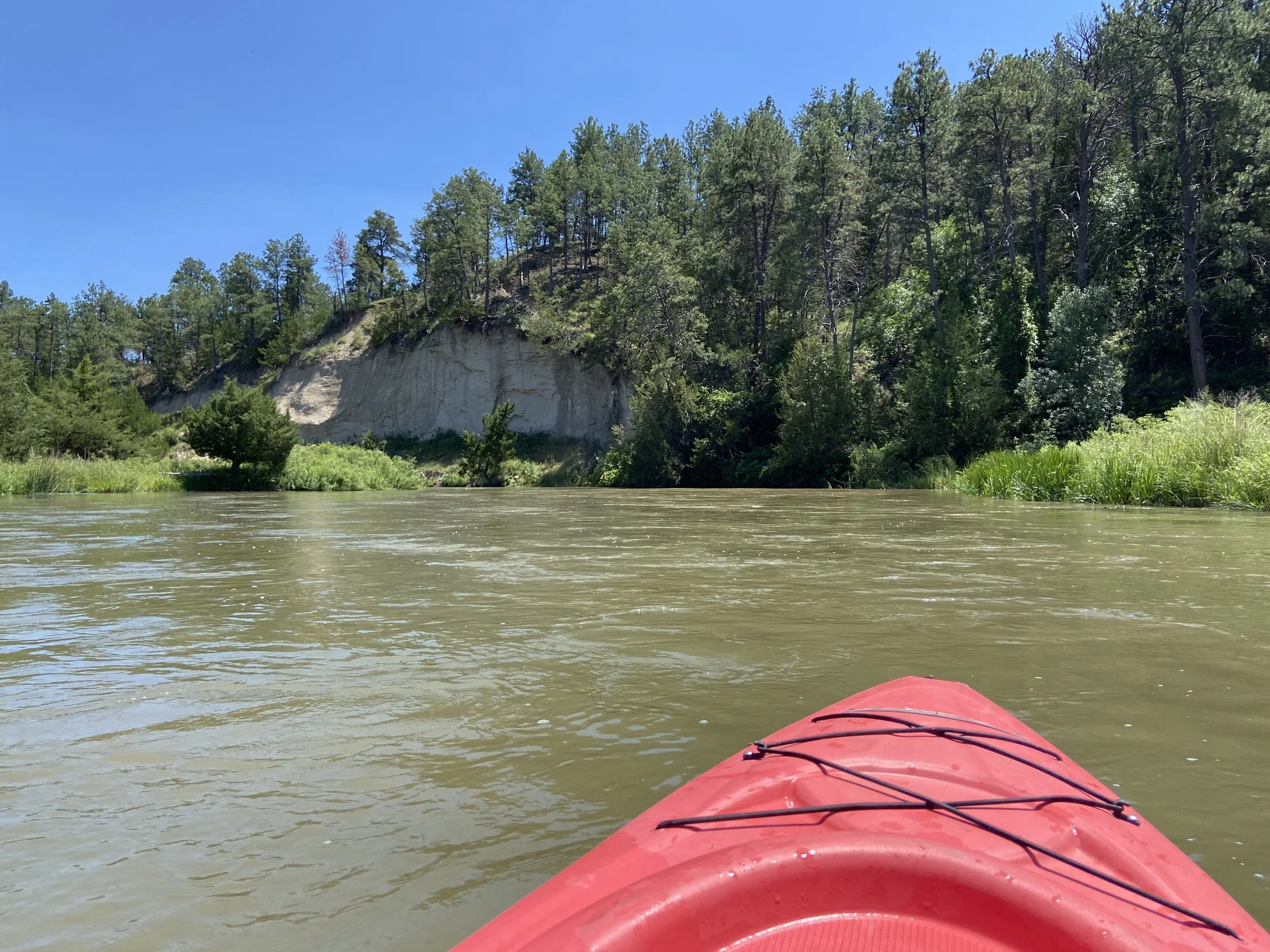
No sooner had I parted the wild indigo and punted from the banks than a shadow swept across the water. I dropped the paddle and craned my neck to the sky. A freckle of a cloud. A glaring noonday sun. Two distant turkey vultures and a bald eagle pitching east above the trees, her fingered wings outstretched and flapping with the casual air of a seasoned pilot. Around the next bend: her white head against the green valley walls, her yellow feet strangling a dead cedar, her tail feathers ruddering in the wind. I drifted closer, my kayak yawing over sandbars and strainers, until she dropped her beak, cocked her wings and with three great heaves -- a flag whipping in the wind, a babushka beating a rug -- lifted from the branch and scalloped across the river not 20 metres ahead. We locked eyes. I apologized. She disappeared in the cottonwoods behind me.
So this was the Niobrara, a tributary of the better-known Missouri River -- the Mighty Mo! the Big Muddy! -- sauntering 782 kilometers east across the Sandhills of northern Nebraska from its humble headwaters in Wyoming. The Plains Indians first called it “The Wide-Spreading Water” and their French successors, in their muddled translation, “L’Eau qui Court,” or “The Running Water.” Thirty-five years ago this summer, the United States Congress crowned it a National Scenic River, the first and only in the entire Great Plains, a hard-won distinction still hotly debated in a deeply conservative state that all but fetishizes local control.
A National Natural Landmark since 1984, the Sandhills themselves – roughly 52,000 square kilometers of grass and sand and sky -- are a superlative nesting doll: the largest intact temperate grassland on earth billowing atop the largest sand dune formation in the western hemisphere squatting atop the thickest portion of the Ogallala Aquifer, the largest freshwater aquifer in North America. It’s also home to four of the top ten least populated counties in the country, lending itself to exceptional night skies and a silence that often unsettles the newcomer.
And still the Niobrara stands out. Down here in the valley, the humid east meets the arid west in a bacchanal of hybrid subspecies and historical outcasts, homesteaders and horsethieves and hundreds of spring-fed waterfalls. Here the boreal survivors of an Ice Age past take refuge in the cool springbranch canyons of the north-facing slopes. Here -- and only here -- thrives the Bailey’s eastern woodrat. Here the Ponca, the Pawnee and the Sioux hunted bison, elk and sometimes each other. Here the cowboys drove their cattle from Texas and finally the Natives from their homeland. Here the bone hunters unearthed an unprecedented bonanza of prehistoric mammals that all but settled Darwin’s theory of evolution. Here the acid-tongued Mari Sandoz and her lusty admirer, Jim Harrison, independently foraged the raw material for their respective classics, Old Jules and Dalva, both should-be staples in the canon of prairie literature.